How a sportswear giant lost its way, alienated its audience and discovered that cutting out the high street wasn’t quite the genius move it thought it was.
There was a time when Nike could do no wrong. The Swoosh was everywhere – on the terraces, the streets, the basketball courts and the high street. From Air Max to Air Jordan, Nike wasn’t just selling trainers; it was breaking new ground.
Then something changed, and not for the better!
Today, the sportswear giant is battling declining sales, fierce competition and the consequences of a retail strategy that saw it turn its back on some of the very retailers that helped build its empire.
And somewhere along the way, Nike also became increasingly comfortable with corporate virtue signalling.
So, did Nike go woke and go broke? Or did corporate arrogance simply get the better of a brand that once understood its customers?
THE POLITICS OF SELLING TRAINERS
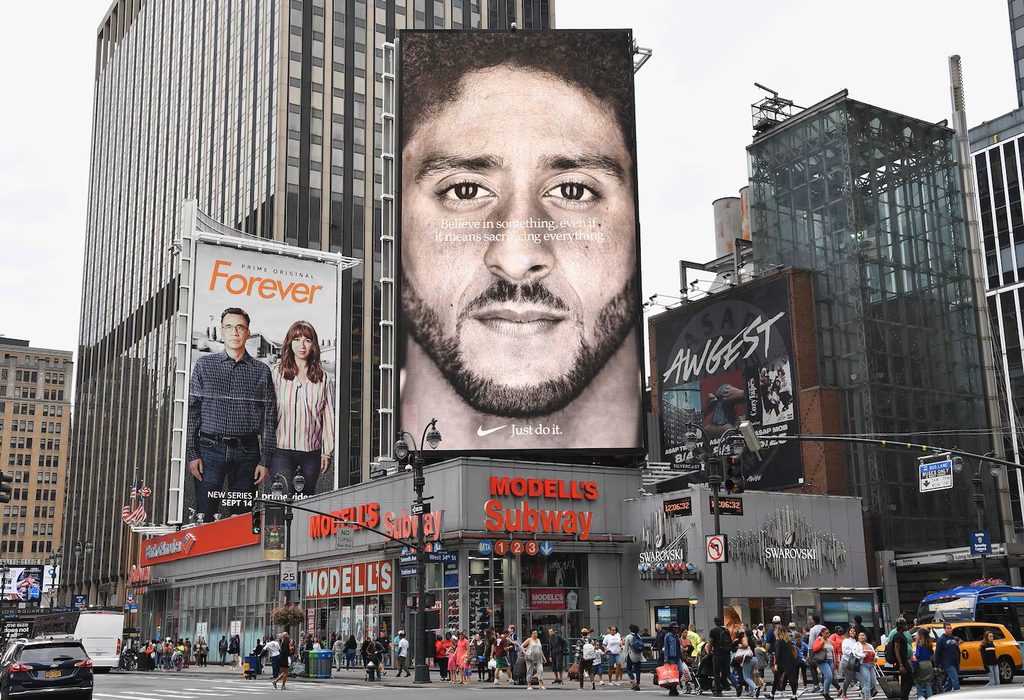
Nike’s embrace of progressive politics became particularly visible in 2018, when it launched its controversial Colin Kaepernick campaign. The initial commercial response was positive, with online sales reportedly surging following the campaign.
But the broader question remains: when does a brand’s political positioning begin to overshadow the products it is supposed to be selling? Nike’s increasingly prominent association with DEI initiatives and social causes may have pleased some consumers, but it also risked alienating others.
And here’s the thing: Nike’s appeal was never supposed to be confined to one political tribe. Its greatest strength was its universality. Their trotters were worn by football fans, athletes, sneaker-freaks (so-called) and ordinary people from every walk of life.
When a brand begins to feel more interested in making political statements than connecting with its customers, it risks undermining that appeal.
THE HIGH-STREET DISASTER
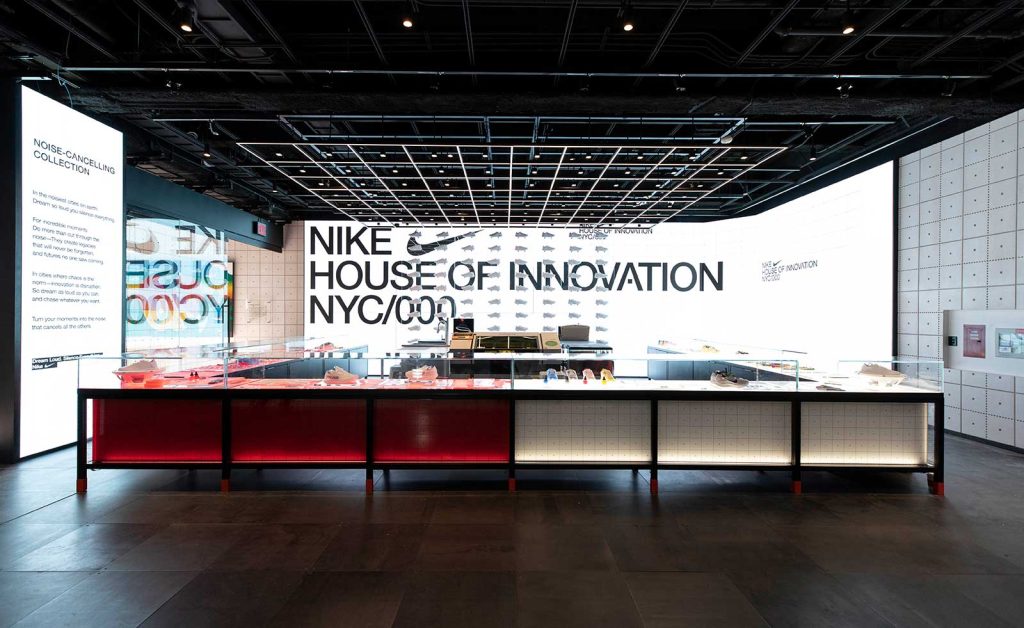
Perhaps Nike’s biggest strategic blunder, however, was its decision to increasingly prioritise selling directly to consumers through its own stores and digital platforms. The logic was simple: cut out the middleman, improve margins and take greater control of the customer relationship.
Except the middleman wasn’t the problem.
Retailers such as JD Sports and Foot Locker had spent decades making Nike products accessible to millions of customers. They provided visibility, footfall and an enormous distribution network.
Nike’s decision to reduce its reliance on wholesale partners meant fewer places for consumers to discover and purchase its products. And when Nike’s own digital sales subsequently struggled, the strategy began to look a lot less clever.
The numbers are telling.
Nike generated approximately $51.4 billion in revenue in FY2024. By FY2025, that figure had fallen to $46.3 billion – a decline of roughly 10%. Nike Direct revenue fell 13% in FY2025, while net income dropped by 44%. These are not the figures of a company enjoying an uncomplicated commercial success story!
And under CEO Elliott Hill, Nike has been working to rebuild the wholesale relationships it previously sought to reduce. Funny how that works.
WHEN THE PRODUCT STOPS BEING SPECIAL
Nike has also faced a growing challenge from competitors. Hoka and On have made significant inroads into performance running, while Adidas has enjoyed renewed interest in its classic footwear. Meanwhile, Nike has increasingly relied on familiar ‘franchises’ such as the Air Force 1, Dunk and Air Jordan 1. Iconic products, certainly. But even icons can become overexposed.
The fashion cycle is unforgiving. Today’s must-have trainer can quickly become tomorrow’s discounted bargain in Sports Direct. Nike’s challenge is no longer simply about selling more trainers. It’s about creating products that people genuinely want to buy – at full price. Because no amount of corporate messaging can compensate for a product that consumers no longer find compelling.
GOING WOKE, GOING BROKE?
Let’s be clear: Nike isn’t literally going broke. It remains a hugely profitable multinational. And its financial reports do not establish that DEI initiatives or political marketing directly caused its declining sales, although they certainly haven’t helped!
The problems are more complex: weak demand, product competition, excess inventory, discounting and strategic miscalculations. But that doesn’t make the question of brand positioning irrelevant.
Nike’s financial troubles raise a broader question about corporate culture: have some businesses become so preoccupied with demonstrating their ‘values’ that they’ve lost sight of the people paying their bills?
Consumers don’t owe a company their loyalty. They can choose another brand. They can spend their money elsewhere, and they can decide that a company which once represented something meaningful to them no longer does.
Nike’s story is a reminder that even the most powerful brands are not invincible.
This athletic juggernaut was built on sport, innovation and aspiration. Not corporate politics. Not boardroom virtue signalling. And certainly not the assumption that customers would follow the brand wherever it chose to go. But that’s the fatal mistake an icon makes when it takes a wrong turn down the yellow brick road of wokeness!
Nike needs to rediscover what made it great, because the real danger isn’t simply going woke. It’s forgetting why people bought from you in the first place.
And if Nike doesn’t figure that out, the road back to the top could be a very long and arduous one. Because let’s face it, there aren’t enough Scousers in the world to prop the brand up on 110 sales alone!