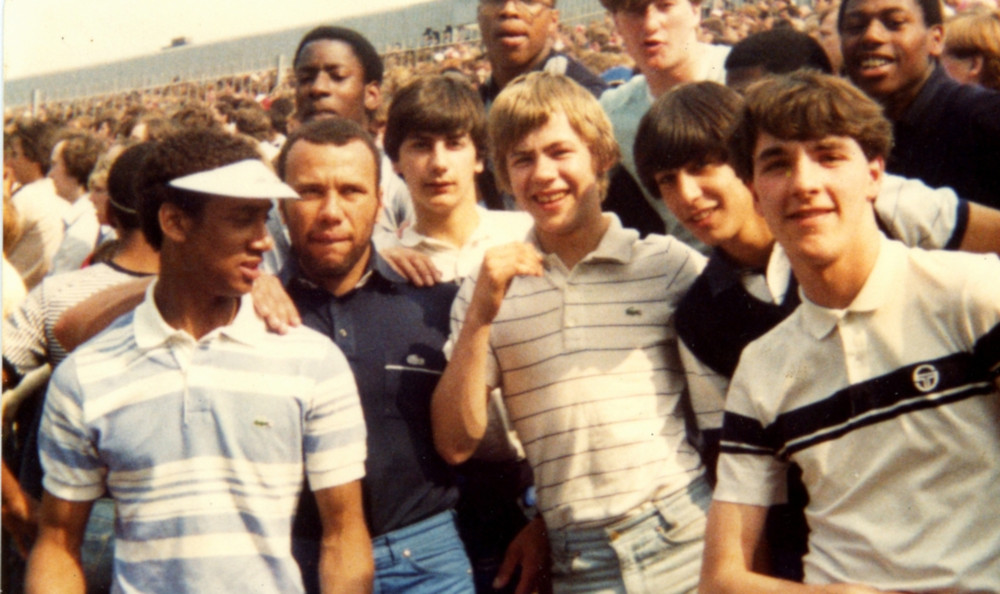
There was a time when writing about a subculture required actually being part of it. To capture the essence of a movement, you had to live it, breathe it, and navigate the environments where it actually flourished – whether that meant sweat-soaked warehouse parties or hostile away grounds. Today, the landscape looks very different. Mainstream fashion media has largely abandoned the art of the written word, opting instead for a lazy reliance on high-production photography and flashy, fast-scrolling imagery. Meanwhile, a new wave of online commentators armed with Google search tabs, half-read Wikipedia summaries, and curated Reddit threads are busy regurgitating plastic platitudes about subcultures that they’ve only ever viewed through a screen.
Nowhere is this trend more exhausting than in the sudden, mainstream romanticisation of the Casual movement.
Walk into any major digital editorial office today, and you will find the same formula. Articles are no longer written; they are assembled. A massive, high-resolution image takes up three-quarters of the screen, followed by a few generic sentences, and of course, the inevitable affiliate carousel! The photography does all the heavy lifting. Editors assume the modern reader has the attention span of a goldfish, so they substitute deep cultural analysis with bright colours and airbrushed press-packs. They capture the garments, the iconic logos, the archival reissues-but completely lose sight of the true meaning. They show you the clothes, but can’t tell you what it actually felt like to wear them in a hostile away end in 1989!
But as frustrating as the lazy, image-heavy mainstream press can be, it’s almost preferable to the alternative: the pretentious pseudo-intellectualism of internet subculture “experts.”
We have all seen them on TikTok, Insta, Substack, and Twitter (sorry X), those clueless cunts with a master’s degree in social anthropology who have never stepped foot inside a football ground, let alone travelled across the country on a freezing cold Tuesday evening, positioning themselves as the ultimate authorities on working-class fashion. Their methodology is painfully transparent. They spend an afternoon scrolling through Wikipedia and old archival forums, compile a list of iconic brands, and then drench the whole thing in a thick layer of academic horse shit!
Suddenly, a subculture born out of raw economic defiance, working class attitude, and one-upmanship is stripped of its meaning. They don’t talk about the actual lived experience; instead, they use pretentious terms like “the juxtaposition of utilitarian sportswear within socio-economic structures,” or describe a vintage Mille Miglia as a “subversive reclamation of bourgeois aesthetics.”
It is exhausting, and frankly, complete and utter bollocks!
The Casual movement was never an academic exercise. It wasn’t born in a university lecture theatre or cultivated to be curated on a digital mood board. It was an organic, authentic, and highly competitive subculture forged by working-class lads and lasses who used clothing as a language. It was about belonging, obsession, and the thrill of the chase-finding a rare Italian jacket before anyone else did, and wearing it with an effortless swagger. When you reduce that lived experience to a series of hollow buzzwords and algorithmic infused search terms, you sanitise it. You take something raw and make it look like a PowerPoint presentation (is that even still a thing)?
Mainstream fashion columns and internet tastemakers have turned casual culture into a museum exhibition-beautiful to look at, clinically described, but completely devoid of any authenticity. Visuals are seductive, and don’t get me wrong, history needs to be preserved. But if you’re going to write about the Casuals, drop the pretentious journo bollocks, close the Google tabs, and at least have the decency to talk to the people who were actually there. Thank fuck for Clobber Magazine!